Sophon
The Dark ForestSophon is the Trisolaran knowledge particle, a remote instrument of observation, communication, and scientific containment whose presence transforms the strategic and intellectual conditions of the Solar System. It can watch human activity across Earth, interfere with the development of fundamental physics, and communicate with selected humans, yet it cannot read human thoughts. That combination—near-total external visibility paired with a blind spot inside the mind—creates both humanity’s greatest vulnerability and the narrow foundation of the Wallfacer Project.
Nature and Communication
Sophon’s most unsettling feature is not merely that it observes humanity, but that it makes observation continuous and intimate. On the bow of Judgment Day, Mike Evans conducts a real-time conversation with the distant world while text displayed by the Sophon appears on his retinas, sharply visible against the Pacific night. The exchange is already their twenty-second live conversation, although communication has encountered difficulties because the Trisolarans can understand individual human references without grasping the whole cultural and conceptual system from which those references come.
The contrast becomes explicit when Evans asks about Trisolaran communication organs. The reply states that the Trisolarans have none: their brains can display thoughts directly to the outside world. Their thoughts emit electromagnetic waves across all frequencies, including visible light, and can be displayed at a significant distance. For them, thinking and speaking are therefore synonyms. Sophon-mediated dialogue thus reveals a civilization organized around direct mental transparency, while human communication depends on biological organs that insert a distance between thought and expression.
This difference produces a moment of deep cross-civilizational misrecognition. The Trisolaran voice describes human communication organs as an evolutionary deficiency and a biological weakness, claiming that direct display of thought is more efficient. Evans rejects the judgment, but cannot immediately explain why. When the Trisolaran asks what “scheming” and “pretending” are, Evans falls silent. The silence is itself evidence of the conceptual gap: the human strategic advantage depends on practices that a civilization equating thought with speech finds difficult to imagine.
Surveillance and the Wallfacer Project
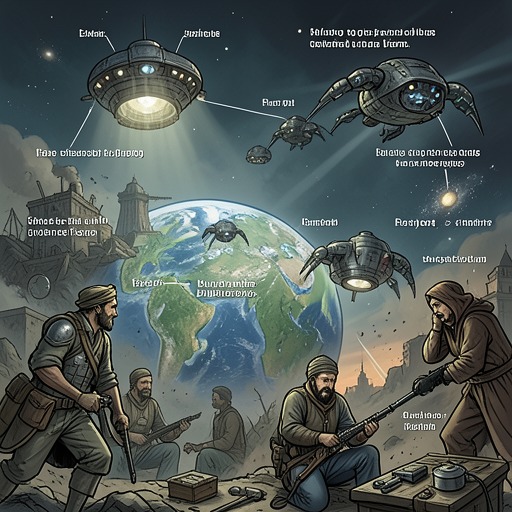
The arrival of additional Sophons means that Earth is treated by the enemy as a completely transparent world. Sophons are constantly reaching the Solar System and Earth, so every meeting room, file cabinet, computer hard drive, and storage medium is exposed to Trisolaran inspection. Plans become visible to the enemy command four light-years away as soon as they take shape, and any ordinary human communication becomes a possible leak.
This transparency makes conventional secrecy impossible, but it also reveals the limit of Sophon surveillance. Sophons can understand human language and read printed texts and computer data at extremely high speed, yet they cannot read human thoughts. The private mind therefore becomes the last secure location in a civilization otherwise stripped of secrecy. The Wallfacer Project is built directly on that contradiction: its selected planners must formulate their strategies entirely in their own minds, while their outward actions and explanations remain deliberately false, creating a maze of misdirection for both humanity and the enemy.
The project’s logic depends on a specifically Trisolaran weakness. Precise intelligence indicates that the Trisolarans communicate through direct, open thoughts and are consequently deficient in tricks, camouflage, and deception. Sophon surveillance gives them overwhelming informational reach, but does not automatically give them the interpretive habits required to decode human strategic performance. The particle therefore does not simply erase the possibility of strategy; it changes strategy from the concealment of information into the manipulation of observable behavior.
Scientific Containment and Technological Consequences
Sophon power extends beyond observation. When Zhang Beihai learns that the space-based high-energy physics research project has been stopped, the explanation is blunt: “The sophons won.” The statement marks the defeat of a scientific program not through the destruction of its laboratories, but through the creation of a barrier against the theoretical advances humanity needs.
The resulting condition is carefully divided between engineering acceleration and fundamental-physics stagnation. After unprecedented investment, technology advances with startling speed, but humanity is described as making a final sprint toward the Sophon barrier. Cutting-edge physics remains stagnant, the reservoir of theory is being drained, and technological progress is expected eventually to decelerate and halt. Sophon containment thus creates a paradoxical future: humanity can accumulate applications and improve existing technological lines while losing the theoretical capacity to open genuinely new ones.
Research into the mind exposes another boundary. Bill Hines and Keiko Yamasuki’s teams identify critical thinking not as a function located in one fixed brain region, but as a dynamic mode of nerve-impulse transmission. A powerful computer can locate that pattern mathematically, like finding a small whirlpool in an immense ocean. Yet Hines understands that the research has also brought the Sophons into the picture: the essence of thought is being pursued at the quantum level, and the Sophons are waiting for the researchers just as humanity is waiting for them. The particle becomes both an obstacle to knowledge and the implied watcher at knowledge’s frontier.
The research produces a dangerous by-product. Scientists learn to identify the mechanism by which the cerebral neural network makes judgments and to influence the outcome directly, omitting the ordinary calculation step. When information enters the brain, an engineered intervention can make the brain judge that information genuine without conscious reasoning. This discovery is not presented as a simple triumph over the Sophons. Instead, it shows how the pressure created by Sophon interference drives humanity toward forms of knowledge that threaten the independence of judgment itself.
Historical and Social Effects
Sophon surveillance reshapes institutions as well as laboratories. The Wallfacers are placed under intense public scrutiny and elevated into messiah figures, while legends of supernatural ability circulate through politics, popular culture, and science-fiction films. Their immense popular and political capital makes it easier for them to command vast resources. The exception is Luo Ji, who remains secluded, never showing his face and revealing neither his whereabouts nor his activity. His disappearance demonstrates the difference between public symbolic power and private strategic concealment in a world watched by Sophons.
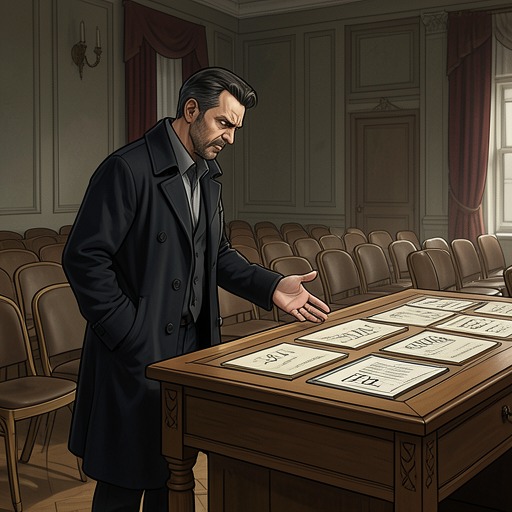
The particle’s effects also persist through political transformation. After centuries of crisis and technological change, the old great powers decline, while a suprastate space fleet rises. The new order is not a return to political transparency or unity; it is another structure formed under the conditions imposed by Sophon surveillance and the approaching Trisolaran threat. Even the persistence of older media carries this tension. In a remote corner of the Internet, the virtual Three Body world comes back to life, while later solemn political proceedings use holographic interfaces alongside paper documents. Sophon-era civilization is therefore technologically advanced but haunted by older forms of mediation, secrecy, and ritual.
Limits, Countermeasures, and Narrative Significance
Sophon power is immense but not absolute. In the aftermath of Luo Ji’s near loss of consciousness, Earth sends a stream of high-power radio waves toward the Sun. The waves penetrate the convection zone, reach an energy mirror in the radiation zone, and are reflected outward after being magnified hundreds of millions of times. This transmission carries Luo Ji’s spell into the cosmos at the speed of light, demonstrating that humanity can still act through large-scale physical systems even when Sophons obstruct the development of new fundamental theory.
The same strategic environment helps explain the later crisis over escape. After the combined fleet is annihilated and the Battle of Darkness erupts among surviving warships, public suspicion of Escapism intensifies. Sophon-mediated vulnerability has made survival beyond Earth a military and moral question, not merely an engineering project: a civilization that breaks its spiritual bonds with Earth may become something called Negacivilization. The threat posed by the Sophons thus reaches beyond tactical surveillance. It helps generate the political fears, scientific restrictions, and competing definitions of human identity that govern the crisis.
As an object, Sophon is most powerful when it remains both particle and social condition. It appears as a communication channel, a surveillance presence, a scientific blockade, and an intellectual opponent whose own culture cannot fully understand deception. Its central paradox governs the novel’s strategic imagination: Earth is transparent in every external record, yet the mind remains opaque. Humanity’s resistance begins in that narrow interior space, where thought can still diverge from speech and where a hidden plan can survive the gaze of an otherwise all-seeing enemy.